The Ultimate Guide to SSC CGL 2026 Notification: 12,256 Vacancies, Post Details, Selection Process, and Strategic Preparation Plan messy
The wait is officially over for millions of central government job aspirants across India. The Staff Selection Commission (SSC) has officially released the detailed notification for the Combined Graduate Level (CGL) Examination 2026. This year, the commission has announced a whopping 12,256 tentative vacancies for highly prestigious Group ‘B’ and Group ‘C’ posts within various ministries, departments, and organizations of the Government of India.
Whether your dream is to work as a Postal Assistant in the Ministry of Communications, an Assistant Section Officer (ASO) in the Central Secretariat Service, or an Inspector in the Income Tax Department, the SSC CGL 2026 exam is your golden ticket.
With the online application window open from May 21, 2026, to June 22, 2026, it is time to move from planning to execution. This extensive, 2,000-word comprehensive guide breaks down every single detail of the notification—including key dates, shifting post-wise structures, application updates, localized exam patterns, eligibility metrics, and an actionable, master preparation strategy to help you ace the exam.
1. SSC CGL 2026 Notification Overview
The Combined Graduate Level Examination is widely considered one of the most competitive exams in India. It bridges the gap between ambitious graduates and stable, authoritative, and rewarding careers in the central government.
Here is a macro look at the recruitment drive:
-
Recruiting Body: Staff Selection Commission (SSC)
-
Exam Name: Combined Graduate Level Examination, 2026 (CGL 2026)
-
Total Openings: 12,256 Posts (Tentative)
-
Classification: Group ‘B’ (Gazetted & Non-Gazetted) and Group ‘C’ Positions
-
Job Category: Permanent Central Government Jobs
-
Application Mode: Online via the newly updated portal (https://ssc.gov.in)
One of the major highlights for regional aspirants this year is the continued expansion of multilingual options. The computer-based Tier-I written examination will be accessible in regional languages—including Telugu, Hindi, and English—allowing candidates across India to attempt sections in their primary language. Furthermore, exams will be heavily allocated across home-district testing centers to minimize regional travel stress.
2. Crucial Dates You Cannot Miss
Missing a deadline can completely end your preparation journey before it even begins. Below is the full official timeline for the SSC CGL 2026 exam cycle. Mark these dates in your calendar immediately.
| Exam Event | Deadline / Tentative Timeline |
| Official Notification Release Date | May 21, 2026 |
| Commencement of Online Applications | May 21, 2026 |
| Closing Date for Submitting Online Forms | June 22, 2026 (by 23:00 Hrs / 11:00 PM) |
| Last Date & Time for Online Fee Payment | June 23, 2026 (by 23:00 Hrs / 11:00 PM) |
| Application Form Correction Window | June 29, 2026, to July 01, 2026 (until 23:00 Hrs) |
| SSC CGL Tier-I Exam Date (Computer-Based) | August – September 2026 |
| SSC CGL Tier-II Exam Date (Computer-Based) | December 2026 |
3. Post Details, Department Layouts, and Pay Scales
The 12,256 vacancies span across multiple pay matrices defined by the 7th Central Pay Commission (CPC). The salaries range from entry-level administrative payouts to executive-grade scales. Let us break down the primary positions, their parent ministries, and corresponding financial structures.
Pay Level 8 ($₹47,600$ to $₹1,51,100$)
These represent the highly coveted Group ‘B’ Gazetted executive positions. They offer the highest basic entry pay in the CGL bracket.
-
Assistant Audit Officer: Indian Audit & Accounts Department under C&AG.
-
Assistant Accounts Officer: Indian Audit & Accounts Department under C&AG.
Pay Level 7 ($₹44,900$ to $₹1,42,400$)
These are elite executive and desk-profile Group ‘B’ Non-Gazetted posts requiring high analytical competencies.
-
Assistant Section Officer (ASO): Central Secretariat Service (CSS), Intelligence Bureau (IB), Ministry of Railways, Ministry of External Affairs (MEA), and AFHQ.
-
Inspector of Income Tax: Central Board of Direct Taxes (CBDT).
-
Inspector (Central Excise / Examiner / Preventive Officer): Central Board of Indirect Taxes and Customs (CBIC).
-
Sub-Inspector: Central Bureau of Investigation (CBI).
Pay Level 6 ($₹35,400$ to $₹1,12,400$)
A solid mix of field inspections, mathematical analysis, and deep-level auditing profiles.
-
Assistant / Assistant Section Officer: Other Central Ministries and Independent Statutory bodies.
-
Divisional Accountant: Offices under C&AG.
-
Sub-Inspector / Junior Intelligence Officer: Narcotics Control Bureau (Ministry of Home Affairs).
-
Junior Statistical Officer (JSO): Ministry of Statistics & Programme Implementation.
Pay Level 5 ($₹29,200$ to $₹92,300$)
These positions constitute the foundational accounting and clerical infrastructure of central departments.
-
Auditor: Offices under C&AG, CGDA, and other Ministries.
-
Accountant / Junior Accountant: Various Central Ministries and Controller General of Accounts.
Pay Level 4 ($₹25,500$ to $₹81,100$)
This level sees the maximum volume of candidate deployment, driving public-facing logistics and foundational tax tracking.
-
Postal Assistant (PA) / Sorting Assistant (SA): Department of Posts, Ministry of Communications. (Note: This profile commands a massive chunk of vacancies within the 2026 layout).
-
Tax Assistant: CBDT and CBIC.
-
Senior Secretariat Assistant / Upper Division Clerk: Central government cadres outside standard structured services.
4. Eligibility Criteria: Who Can Apply?
Before initiating the online registration process, ensuring alignment with the rigid guidelines governing age limitations and academic parameters is paramount.
A. Age Limit (Calculated as of August 01, 2026)
The standard age brackets vary across individual job listings:
-
For Minimum Age Profiles: Candidates must be at least 18 years old.
-
For Maximum Age Profiles: The general ceiling sits at 30 years (Certain desk-oriented and executive spots stretch up to 32 years, such as the Junior Statistical Officer post).
Statutory Age Relaxations
Government norms grant specific upper age extensions for reserved categories:
-
OBC (Non-Creamy Layer): 3 Years relaxation (up to 33 years)
-
SC / ST: 5 Years relaxation (up to 35 years)
-
PwBD (Unreserved): 10 Years relaxation
-
Ex-Servicemen (ESM): 3 Years deduction of military service rendered from actual age.
B. Educational Qualifications
A fundamental requirement is holding a graduation degree. However, specialized profiles enforce discrete subject-matter mandates:
-
Postal Assistant, Tax Assistant, ASO, & Inspectors: A Bachelor’s Degree in any stream or discipline from a recognized University or equivalent. Final-year graduation students are fully eligible to apply, provided their final results are officially declared and certified on or before August 01, 2026.
-
Junior Statistical Officer (JSO): Bachelor’s Degree in any subject PLUS a minimum of 60% marks in Mathematics at the 12th-grade standard, OR a Bachelor’s Degree with Statistics as one of the explicit core subjects at the degree level.
-
Statistical Investigator Grade-II: Bachelor’s Degree with Statistics as a primary subject across all academic years, or specialized modules spanning Data Science, AI, or advanced mathematics as laid out in the technical appendix.
5. The Selection Blueprint: Tier-I and Tier-II Exam Patterns
The Staff Selection Commission implements a streamlined, highly objective selection system separated into two successive computer-based test (CBT) tiers.
Phase 1: Tier-I Examination (Qualifying Screening)
The Tier-I round acts as a competitive filter. The marks scored here are normalized but do not figure into the final merit calculation. However, clearing the category-specific cutoff is mandatory to reach Tier-II.
The test spans 60 minutes (1 hour) and comprises 100 multiple-choice questions totaling 200 marks:
| Section | Number of Questions | Maximum Marks |
| General Intelligence and Reasoning | 25 | 50 |
| General Awareness | 25 | 50 |
| Quantitative Aptitude | 25 | 50 |
| English Comprehension | 25 | 50 |
| Total | 100 | 200 |
⚠️ Negative Marking Warning: There is a strict penalty of 0.50 marks deducted for every incorrect response in the Tier-I exam. Blind guessing can rapidly destroy a healthy score.
Phase 2: Tier-II Examination (The Merit Decider)
The Tier-II phase dictates your final rank and subsequent post allocation. It is intensely granular and split into distinct sessions.
Paper-I (Compulsory for All Post Cadres)
Paper-I takes place across a single day, broken into two structural sessions lasting a total of 2 hours and 30 minutes.
Session I (2 Hours 15 Minutes)
-
Mathematical Abilities: 30 Questions (90 Marks)
-
Reasoning and General Intelligence: 30 Questions (90 Marks)
-
Subtotal Section 1: 60 Questions | 180 Marks (Allocated Time: 1 Hour)
-
English Language and Comprehension: 45 Questions (135 Marks)
-
General Awareness: 75 Marks (25 Questions)
-
Subtotal Section 2: 70 Questions | 210 Marks (Allocated Time: 1 Hour)
-
Computer Knowledge Module: 20 Questions (60 Marks)
-
Subtotal Section 3: 20 Questions | 60 Marks (Allocated Time: 15 Minutes — Qualifying nature only, but mandatory threshold apply).
Session II (15 Minutes)
-
Data Entry Speed Test (DEST) Module: Executing a precise, timed typing test mimicking real office inputs. Candidates must fulfill basic speed parameters without exceeding specified error margins.
Paper-II (Exclusive to Specialized Posts)
-
Statistics Paper: 100 Questions | 200 Marks | 2 Hours duration (Applicable solely to candidates qualifying for the Junior Statistical Officer and Statistical Investigator profiles).
6. Comprehensive Syllabus Breakdown
To plan your study schedule effectively, you need to understand exactly what topics are tested within each major subject boundary.
                  ┌────────────────────────────────────────┐
                  │          SSC CGL Core Subjects         │
                  └───────────────────┬────────────────────┘
                                      │
         ┌───────────────────┬────────┴───────────┬───────────────────┐
         ▼                   ▼                   ▼                   ▼
┌─────────────────┐ ┌─────────────────┐ ┌─────────────────┐ ┌─────────────────┐
│  Quant Aptitude │ │    Reasoning    │ │     English     │ │Gen. Awareness   │
└────────┬────────┘ └────────┬────────┘ └────────┬────────┘ └────────┬────────┘
         │                   │                   │                   │
         ├─ Arithmetic       ├─ Verbal           ├─ Grammar          ├─ History/Geo
         └─ Advanced Math    └─ Non-Verbal       ├─ Vocabulary       ├─ Polity/Econ
                                                 └─ Comprehension    └─ Current Affairs
Quantitative Aptitude
-
Arithmetic Frameworks: Percentage Dynamics, Ratio & Proportion, Profit, Loss & Discount, Simple & Compound Interest, Time, Speed & Distance, Time & Work, Mixtures & Alligation, Averages, and Partnership.
-
Advanced Mathematics: Number Systems, Basic Algebraic Identities, Linear Equations, Geometry (Triangles, Circles, Congruence, and Theorems), Coordinate Geometry, Mensuration (Area, Volume of Pyramids, Spheres, Cylinders), Trigonometry (Ratios, Complementary Angles, Heights & Distances), and introductory Probability and Statistical Measures (Mean, Median, Mode, Standard Deviation).
General Intelligence & Reasoning
-
Verbal Processing: Analogies, Classification, Coding-Decoding, Blood Relations, Direction Sense Tests, Syllogisms, Matrix, Venn Diagrams, Missing Number series, Puzzles, and Seating Arrangements.
-
Non-Verbal Processing: Paper Folding & Cutting, Mirror & Water Images, Embedded Figures, Pattern Completion, and Cube/Dice spatial manipulations.
English Language & Comprehension
-
Grammar Systems: Error Spotting, Sentence Improvement, Active/Passive Voice transformations, and Direct/Indirect Speech transitions.
-
Vocabulary Matrix: Synonyms, Antonyms, Idioms & Phrases, One-Word Substitutions, and Spelling correction protocols.
-
Comprehension Abilities: Cloze Tests, Para-jumbles (Sentence Rearrangement), and Reading Comprehension passages.
General Awareness
-
Static General Knowledge: Indian History (Ancient, Medieval, Modern), World and Indian Geography, Indian Polity & Constitution, and Indian Economy basics.
-
General Science Foundation: Applied physics, basic chemical interactions, and human biology essentials.
-
Current Affairs: Global and national developments over the trailing 10–12 months, tracking central budget blueprints, welfare schemes, sports milestones, summits, and scientific breakthroughs.
7. Step-by-Step Application Process (The New SSC Portal)
The registration workflow has fundamentally changed. The old portal (https://ssc.nic.in) is deprecated. Candidates must execute a completely fresh One-Time Registration (OTR) on the new, updated government domain.
Phase 1: Creating a Fresh OTR (One-Time Registration)
-
Navigate directly to the official, authenticated portal: https://ssc.gov.in/.
-
Click on the ‘Login or Register’ button on the upper landing tab, selecting ‘Register Now’.
-
Enter critical personal details, including your Aadhaar Number, active mobile number, personal email ID, and matriculation certificate identifiers.
-
Verify your identity using the separate OTP arrays sent to your mobile and email simultaneously.
-
Record your newly generated, permanent OTR Registration Number and set your secure password.
Phase 2: Completing the CGL 2026 Application
-
Log into your dashboard using your active OTR credentials.
-
Select the “Combined Graduate Level Examination 2026” link under the Live Examinations panel and click ‘Apply’.
-
Specify your preferred testing cities. Select local options within your home zone to minimize travel during the August–September testing dates.
-
Input your highest academic milestones and specify if you wish to apply for specialized posts like the JSO profile.
-
Live Photo Capture: Unlike past cycles where you uploaded pre-saved photo files, the new interface utilizes a live webcam/mobile camera tool. Ensure you stand in a well-lit space with a plain, neutral background. Do not wear caps, spectacles, or masks during the live capture session.
-
Upload a clean, distinct signature image file (JPEG format, sized between 10 KB and 20 KB).
-
Review your entire form using the preview tool before hitting final submission. Pay the application fee ($₹100$) online via UPI, Net Banking, or Debit Cards if applicable.
8. Ultimate Preparation Strategy to Ace SSC CGL 2026
With Tier-I scheduled for August–September 2026, you have a valuable preparation window. Success requires a balanced approach to your study plan.
A. The 90-Day Structural Study Blueprint
To optimize your study time, structure your weekly focus into three distinct preparation phases:
┌───────────────────────────────────────────────────────────────────────────┐
│                          90-Day Study Schedule                            │
├───────────────────┬───────────────────────────────────┬───────────────────┤
│    Weeks 1 - 4    │            Weeks 5 - 8            │    Weeks 9 - 12   │
│  Concept Mastery  │        Sectional Drills           │   Full Mock Tests │
│ • Core formulas   │ • Timed practice modules          │ • Simulated exams │
│ • Grammar bases   │ • Complex geometry/algebra proofs │ • Speed/accuracy  │
│ • Static GK notes │ • Vocabulary building & reading   │ • Error log review│
└───────────────────┴───────────────────────────────────┴───────────────────┘
Phase 1: Weeks 1 to 4 (Foundations & Concept Mastery)
-
Dedicate 70% of your daily schedule to clearing core conceptual hurdles. Focus on complex geometry proofs, algebraic identities, and arithmetic shortcuts.
-
Read through essential English grammar rules and build a daily vocabulary habit using flashcards.
-
Compile structural, short notes on high-yield static GK topics—such as the Indian Constitution, the freedom struggle, and fundamental geography maps.
Phase 2: Weeks 5 to 8 (Sectional Drills & Problem Acceleration)
-
Shift toward timed sectional tests. Work on clearing 25-question blocks within 12–15 minute deadlines to build mental agility.
-
Practice reasoning puzzles, coding matrices, and non-verbal spatial tests.
-
Read daily news summaries and compile a solid 10-month current affairs ledger focusing on economic indicators and national initiatives.
Phase 3: Weeks 9 to 12 (Full Mock Exams & Error Remediation)
-
Attempt comprehensive mock tests during the exact hours your final exam will take place. This conditions your mind to maintain high focus during the actual test.
-
Maintain a detailed error log. Analyze every wrong answer and unattempted question to identify weaknesses. Re-verify the underlying concept before starting your next test.
B. Subject-Wise Quick Reference Tips
-
Quantitative Aptitude: Memorize prime squares up to 30, cubes up to 20, fraction-to-percentage conversions, and basic Pythagorean triplets to save precious time during calculation-heavy sections.
-
English Comprehension: Read editorial columns daily to naturalize your processing speed for Cloze tests and sentence re-order modules.
-
Reasoning: Master alphanumeric placement rankings (both forward and backward sets) to solve complex coding riddles in seconds.
-
General Awareness: Avoid getting bogged down in vast, unending historical debates. Focus on high-frequency, actionable data areas like national parks, constitutional amendments, modern scientific terminology, and current international agreements.
Prompt
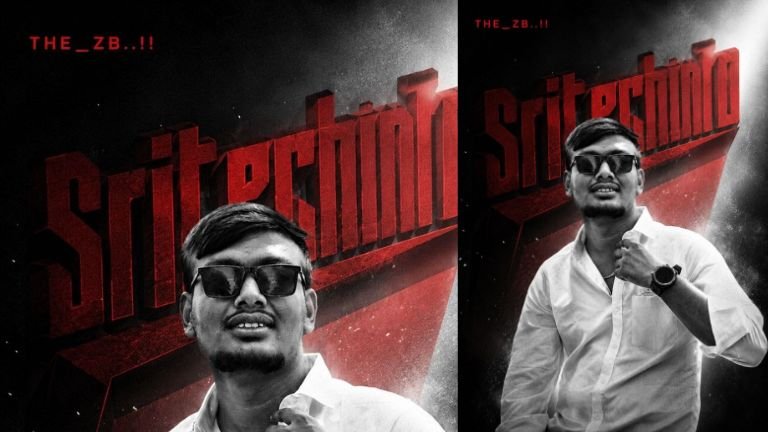
A Uploaded image rugged man with the same beard and messy hair as the uploaded image is captured in a cinematic double exposure portrait.
The image maintains the same pose and profile view, rendered in a grainy, high-contrast black-and-white halftone manga-style texture. Behind him, a large, bold 3D geometric shape or typography Sritechinfo
deep crimson red creates a sharp silhouette. A dramatic beam of white light cuts across the frame highlighting subtle atmospheric particles or mist around him, creating a glowing, cinematic effect. His expression is intense and calm, with strong shadows enhancing facial features. The composition is powerful, minimal. and stylized, with no cigarette or smoking elements.
Face should closely match the uploaded image.
Ultra- detailed, cinematic lighting, poster design,
5:7 aspect ratio
Summary Checklist for Aspirants
-
Verify Eligibility: Ensure your age matches the post requirements as of August 01, 2026, and that you hold a valid graduation degree.
-
Fresh OTR Creation: Set up your profile on the new portal (https://ssc.gov.in).
-
Submit Application Early: Complete your form well before the June 22, 2026 deadline to avoid peak traffic server crashes.
-
Prepare Documentation: Ensure your certificates are ready for verification, keeping the crucial August 01, 2026 cut-off date in mind.
-
Launch Your Prep Plan: Treat Tier-I and Tier-II preparation as an integrated journey. Focus on accuracy first, then scale your speed.
Don’t wait until the final week. Start your process today, set a disciplined study routine, and secure your spot in the central government cadre.