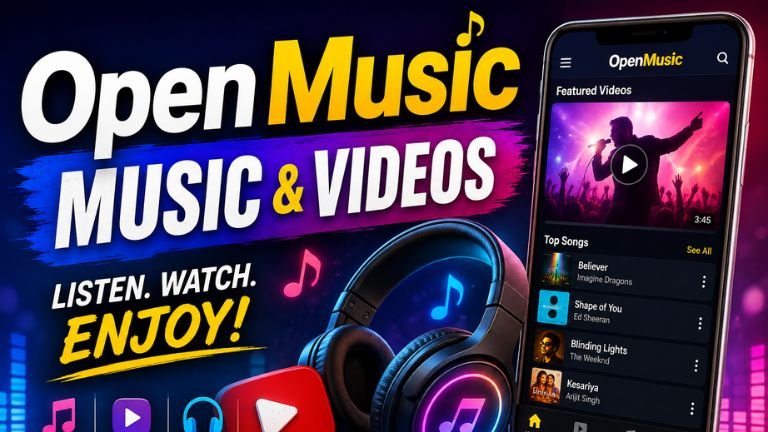
prank ; OpenMusic: Music and Videos – A Complete Guide
Music and videos have become an important part of everyday digital entertainment. People use smartphones, computers, smart TVs, and other connected devices to listen to songs, watch music videos, discover new artists, and enjoy entertainment whenever they want. OpenMusic: Music and Videos represents the idea of bringing music and video entertainment together in one convenient digital experience.
In this article, we will explore what OpenMusic means, its possible features, how music and videos can be enjoyed online, the benefits of digital entertainment platforms, important safety considerations, and tips for getting the best experience.
What Is OpenMusic?
OpenMusic can be understood as a digital music and video platform or service designed around entertainment content. The main concept is simple: users should be able to access music and video content conveniently from their devices.
Traditional entertainment required people to purchase CDs, download individual files, or wait for television programs. Today, digital platforms have changed the way people consume entertainment. A user can search for a song, discover an artist, watch a music video, create playlists, and explore new content within minutes.
The popularity of online music and video services has grown because they provide flexibility. Instead of depending on a particular device or physical media, users can enjoy digital content through internet-connected devices.
Why Music and Videos Are So Popular
Music is one of the most universal forms of entertainment. People listen to songs while working, travelling, exercising, studying, relaxing, or spending time with friends and family.
Videos add another level of engagement. Music videos can combine songs with visuals, storytelling, performances, animation, and creative production. This makes video content especially popular among younger audiences.
Social media has also contributed significantly to the growth of short-form and long-form video content. People can discover a song through a short video and then search for the complete track.
A platform focused on both music and videos can therefore provide a broader entertainment experience than a service focused on only one type of content.
Main Features Users May Expect
A modern music and video platform generally needs several useful features to provide a good user experience.
1. Music Search
Search is one of the most important features. Users should be able to search for songs using titles, artists, albums, genres, or keywords.
An effective search system saves time and helps users quickly find the content they are interested in.
2. Video Content
Video support allows users to enjoy music videos, performances, interviews, documentaries, live recordings, and other visual content.
High-quality video playback is particularly important because users increasingly watch content on larger screens and high-resolution displays.
3. Playlists
Playlists allow users to organize their favorite songs and videos into collections.
For example, a user could create separate playlists for:
- Morning music
- Workout songs
- Travel music
- Relaxing music
- New releases
- Favorite artists
- Movie songs
- Instrumental tracks
Playlists make entertainment more personalized and convenient.
4. Artist Discovery
Discovering new artists is an important part of the music experience. A good platform can help users explore musicians they may not have heard before.
Artist pages can provide information about available songs, albums, videos, and other content.
5. Recommendations
Personalized recommendations can help users discover content based on their interests.
For example, if someone frequently listens to a particular genre, the service may recommend similar music. Recommendations can make it easier to discover new songs without manually searching for every track.
Listening to Music Online
Online music has transformed the traditional music industry. Instead of downloading every song individually, users can often access large libraries through streaming services.
Streaming provides convenience because music can be played directly through an internet connection. Depending on the service, users may also have options for offline listening.
However, users should always check the terms and conditions of the particular platform. Features such as offline playback, downloads, audio quality, and advertisements can vary between services.
Watching Music Videos
Music videos are an important part of modern entertainment. They provide artists with an opportunity to express their creativity visually.
A music video can include:
- Live performances
- Dance sequences
- Storytelling
- Animation
- Cinematic scenes
- Concert footage
- Behind-the-scenes content
- Artist interviews
Video quality can significantly affect the viewing experience. A stable internet connection and a suitable display can help users enjoy high-resolution content more comfortably.
Benefits of Using Digital Music and Video Platforms
There are several advantages to accessing entertainment digitally.
Convenience
The biggest advantage is convenience. Users can access content from home, during travel, or from almost anywhere with a suitable internet connection.
Large Variety
Digital platforms can provide access to different genres, languages, artists, and styles. Users can explore music from their own country as well as international content.
Easy Discovery
Digital search and recommendation features make it easier to discover new songs and artists.
Personalized Entertainment
Playlists and recommendations allow users to create an entertainment experience based on their individual preferences.
Multi-Device Access
Depending on the service, users may be able to access content through smartphones, tablets, computers, smart TVs, and other compatible devices.
Music Across Different Languages
One major advantage of digital platforms is access to multilingual entertainment.
A listener in India, for example, may enjoy Kannada, Telugu, Hindi, Tamil, Malayalam, Bengali, Marathi, English, or international music.
Regional music has also become increasingly accessible to audiences outside its original geographic area. Digital distribution allows artists to reach listeners who may live thousands of kilometres away.
This creates opportunities for independent musicians and regional creators to build audiences beyond their local communities.
OpenMusic and Independent Creators
Digital platforms can be valuable for independent artists because they provide additional ways to reach audiences.
In the past, emerging musicians often depended heavily on record labels, radio stations, television channels, or physical distribution. Today, creators can use digital platforms and social media to promote their work.
Independent artists can create songs, music videos, live performances, podcasts, and other content and build an audience over time.
However, creators should understand copyright rules, licensing requirements, and platform policies before uploading or distributing content.
Importance of Copyright
Copyright is one of the most important issues in online music and video.
Songs, recordings, music videos, movies, photographs, and other creative works can be protected by copyright. Users should not assume that content available online is automatically free to copy, download, modify, or redistribute.
If a person wants to use copyrighted music in a YouTube video, social media post, website, advertisement, or commercial project, they may need appropriate permission or a suitable license.
Using authorized sources helps protect creators and reduces the risk of copyright claims.
Safe Use of Music and Video Services
Users should also pay attention to digital safety.
It is better to use legitimate applications and websites rather than unknown websites offering suspicious downloads or unauthorized content.
Users should avoid:
- Installing unknown applications
- Clicking suspicious download buttons
- Sharing passwords
- Entering payment information on untrusted websites
- Downloading files from questionable sources
- Giving unnecessary permissions to applications
Keeping devices updated and using strong account security can also help protect personal information.
Mobile Entertainment
Smartphones have made music and video consumption more convenient than ever.
A modern smartphone can function as a music player, video player, camera, editing device, and communication tool. Users can carry thousands of songs and hours of video content in a device that fits in their pocket.
Mobile users should consider data consumption when streaming high-quality video. Watching videos at higher resolutions generally requires more data than watching at lower resolutions.
People using mobile data may therefore want to select a suitable video quality based on their data plan and network conditions.
Internet Connection and Streaming Quality
The quality of a streaming experience depends on several factors, including internet speed, network stability, device capability, and the service’s own streaming technology.
If a video repeatedly pauses or buffers, users can try reducing the playback quality, moving to a stronger network connection, restarting the application, or checking whether other devices are using significant bandwidth.
For music, audio quality settings can also affect data consumption.
Building a Personal Music Library
Even when using online services, users can organize their favorite entertainment into personal playlists.
A well-organized library can make it easier to find content quickly.
For example, users can create categories based on mood:
Relaxation: Soft and calm songs.
Energy: Fast-paced music for workouts and activities.
Travel: Songs suitable for road trips.
Focus: Instrumental or low-distraction music.
Favorites: The songs the user listens to most frequently.
This simple organization can improve the overall listening experience.
Music and Video for Creators
Music and video are not only entertainment tools. They are also important for content creators.
YouTubers, bloggers, Instagram creators, filmmakers, educators, and businesses use music and video to communicate with audiences.
Background music can influence the mood of a video, while properly edited visuals can make information easier to understand.
Creators should always make sure that the music and video materials they use are properly licensed or otherwise permitted for their intended purpose.
The Future of Digital Music and Video
The future of online entertainment is likely to become increasingly personalized and interactive.
Artificial intelligence can help platforms improve recommendations, search, subtitles, translations, content discovery, and other features. Better internet connectivity and improved mobile hardware can also make high-quality streaming more accessible.
Short-form videos, live streaming, podcasts, music videos, and interactive entertainment are likely to continue evolving.
At the same time, privacy, copyright, creator compensation, and responsible use will remain important issues.
How to Choose a Good Music and Video Platform
Before using any platform, users should consider several factors.
Content Availability
Check whether the service offers the music, artists, languages, and videos you actually want.
Audio and Video Quality
Look at the available quality options and whether they work well with your internet connection and device.
Cost
Some platforms may offer free access with advertisements, while others may provide paid subscriptions or additional premium features.
Device Compatibility
Check whether the platform works on your smartphone, computer, tablet, smart TV, or other preferred device.
Privacy
Read the platform’s privacy policy and understand what information the service collects and how it is used.
Legal Content
Choose services that provide properly authorized content. Supporting legitimate platforms helps creators and the wider entertainment industry.
link
OpenMusic: Music and Videos represents the growing world of digital entertainment, where music and visual content can be accessed conveniently through modern devices. From discovering new artists and creating playlists to watching music videos and exploring different languages and genres, online entertainment provides users with many possibilities.
The best experience comes from combining convenience with responsible digital habits. Users should choose legitimate services, protect their accounts, respect copyright, and be careful when downloading applications or files from unfamiliar sources.
For creators, digital music and video platforms can provide opportunities to reach audiences, promote original work, and build a community. For listeners and viewers, they offer convenient access to a huge variety of entertainment.
As technology continues to develop, the relationship between music, video, creators, and audiences will continue to evolve. Platforms built around digital entertainment will remain an important part of how people discover, enjoy, and share content in the modern internet era.