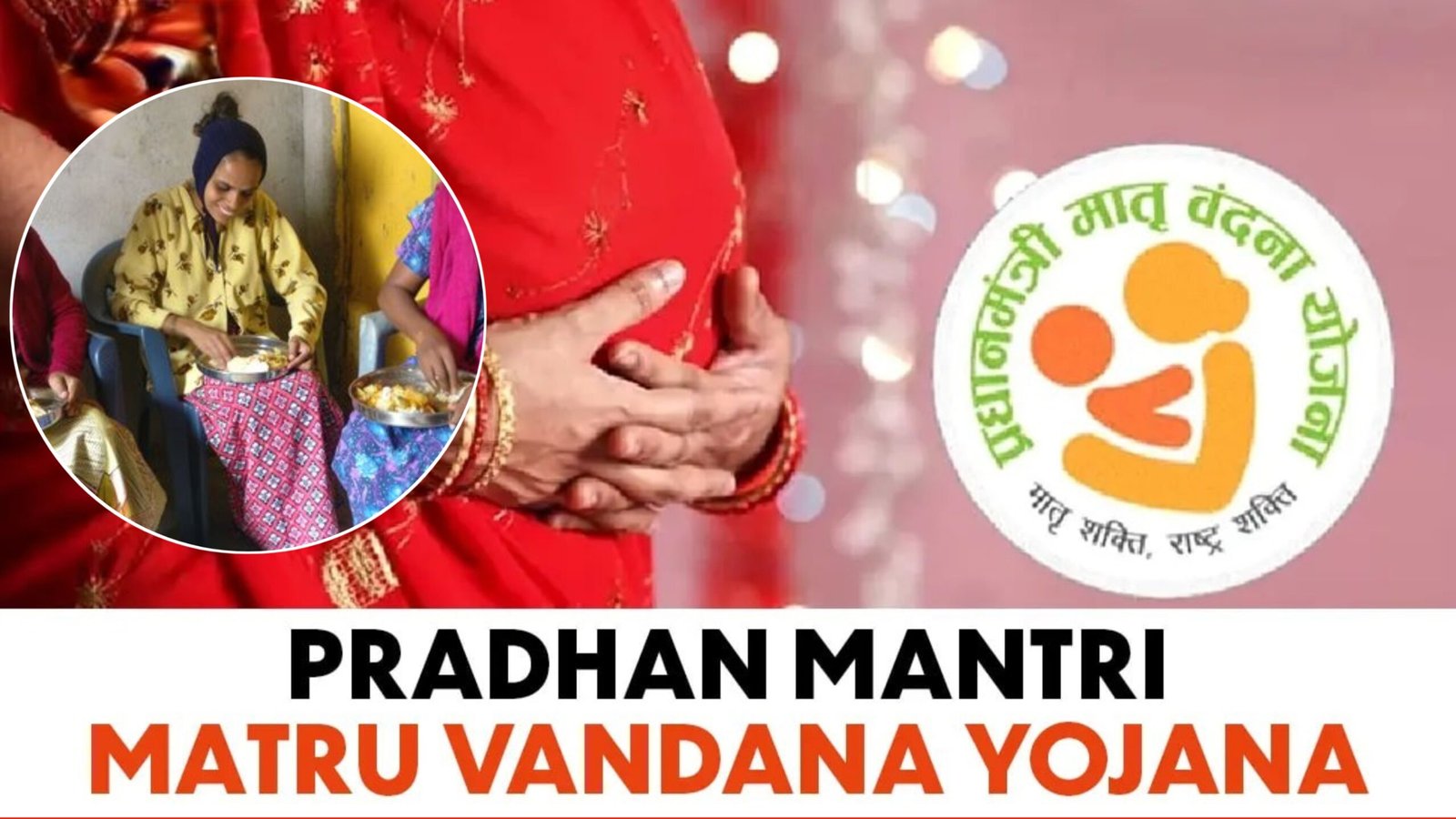
Pregnancy and motherhood are among the most crucial stages in a woman’s life. During this time, women require proper nutrition, rest, and medical care to ensure their well-being as well as the healthy growth of their child. Recognizing the economic and health challenges faced by many women during pregnancy, the Government of India launched the Pradhan Mantri Matru Vandana Yojana (PMMVY) — a maternity benefit program providing ₹6,000 financial assistance to pregnant women and lactating mothers.
This comprehensive explanation explores every detail of this initiative — its objectives, benefits, eligibility, application process, and the impact it has had on the lives of millions of women across India.
Introduction to the Scheme
The Pradhan Mantri Matru Vandana Yojana (PMMVY) is a Central Government-sponsored scheme launched under the Ministry of Women and Child Development (MWCD). It aims to provide partial wage compensation to pregnant and lactating women to help them take adequate rest before and after childbirth and to encourage healthy feeding and childcare practices.
Initially launched on January 1, 2017, PMMVY replaced the Indira Gandhi Matritva Sahyog Yojana (IGMSY). The scheme covers first-time mothers and later expanded to include second live births in certain special cases.
The financial assistance under this scheme — ₹6,000 — is transferred directly into the beneficiary’s bank account through Direct Benefit Transfer (DBT), ensuring transparency and avoiding middlemen.
Objectives of the Matru Vandana Yojana
The PM Matru Vandana Yojana has several core objectives that focus on women’s health, financial independence, and child development:
- To provide financial assistance to pregnant and lactating mothers for proper nutrition and rest.
- To reduce maternal and infant mortality rates by encouraging institutional deliveries and postnatal care.
- To compensate for wage loss during pregnancy and after childbirth, especially for women working in unorganized sectors.
- To promote breastfeeding and healthy infant care practices.
- To ensure that every child receives adequate nutrition and care during the first six months — a crucial phase for development.
Financial Benefit Details
Under the Matru Vandana Yojana, eligible women receive a total of ₹6,000 financial support, disbursed in three installments:
| Installment | Conditions to be fulfilled | Amount (₹) |
|---|---|---|
| 1st Installment | Registration of pregnancy at the Anganwadi Centre (AWC) or Health Facility within 150 days from the Last Menstrual Period (LMP). | 1,000 |
| 2nd Installment | After completion of at least one antenatal check-up (ANC). | 2,000 |
| 3rd Installment | After childbirth and first cycle of immunization of the child (BCG, OPV, DPT, Hepatitis B). | 2,000 |
| Additional Benefit | Under Janani Suraksha Yojana (JSY), additional ₹1,000 may be provided for institutional delivery. | 1,000 |
| Total | ₹6,000 |
Who Can Apply? (Eligibility Criteria)
To receive the benefits under the scheme, applicants must fulfill certain conditions. Here’s a detailed breakdown:
A. Eligible Beneficiaries
- Pregnant Women and Lactating Mothers (PW&LM) who have conceived their first child on or after January 1, 2017.
- Women working in the unorganized sector who do not receive maternity benefits from the government or private employers.
- Mothers aged 19 years or above at the time of conception.
- Second live birth beneficiaries (introduced under PMMVY 2.0) if the child is a girl, to promote gender equality.
B. Ineligible Beneficiaries
- Women who are already receiving similar benefits under any other government scheme (like state maternity benefit programs).
- Government employees or women employed in organizations with maternity leave benefits.
- Women who do not register their pregnancy or fail to complete required health checkups.
Documents Required for Application
Applicants must submit valid documents during registration to verify identity, age, and pregnancy details:
- Aadhaar card of the applicant and husband
- Bank passbook or account details (for DBT transfer)
- Maternity registration slip or Mother and Child Protection (MCP) card
- Pregnancy certificate issued by an accredited health worker or doctor
- Age proof (Birth certificate, Aadhaar, or School certificate)
- Mobile number (for SMS updates and tracking)
- Photograph (passport-size, for record verification)
Application Process: Step-by-Step Guide
There are two primary methods to apply — offline and online.
A. Offline Application through Anganwadi Centre (AWC)
- Visit the nearest Anganwadi Centre (AWC) or Approved Health Facility under your jurisdiction.
- Obtain the PMMVY Registration Form 1A.
- Fill in personal details such as name, husband’s name, Aadhaar number, and bank account details.
- Attach required documents (Aadhaar card, MCP card, and bank passbook copy).
- Submit the completed form to the AWC Supervisor or health worker.
- The registration will be verified and approved by the CDPO (Child Development Project Officer).
- Once verified, the first installment of ₹1,000 is credited to your bank account within a few weeks.
After receiving the first installment, you must fill:
- Form 1B after your first antenatal check-up.
- Form 1C after childbirth and first round of immunizations.
B. Online Application through PMMVY Portal
Women can also apply online through the official PMMVY website or mobile app.
Online Steps:
- Visit the PMMVY official website.
- Register as a new user by entering Aadhaar number and mobile number.
- Log in using your credentials and select “Apply for Benefits.”
- Fill in details about pregnancy, health check-up, and child birth.
- Upload scanned copies of required documents.
- Review and submit the application form.
- Track your application status on the portal.
PMMVY 2.0 – Updated Scheme (2022 onwards)
In 2022, the government revamped the original PMMVY into PMMVY 2.0 to expand its reach and benefits.
Key Features of PMMVY 2.0:
- Coverage extended to second child, if the second child is a girl — promoting “Beti Bachao, Beti Padhao” initiative.
- Integration with Poshan Tracker App, allowing digital monitoring of maternal health and nutrition.
- Simplified Aadhaar-based registration to reduce paperwork.
- Enhanced coordination between Anganwadi Centres and Health Departments.
- Introduction of cashless health check-up benefits through digital health platforms.
Implementation Mechanism
The scheme is implemented by the Ministry of Women and Child Development (MWCD) in collaboration with State Governments and Union Territories.
- Central and State Government Funding Ratio:
- 60:40 for general states.
- 90:10 for North-Eastern and Himalayan states.
- 100% Central funding for Union Territories.
Funds are released to State Treasury, then to District Authorities, and finally credited to the beneficiary’s bank account via DBT.
Importance of the Scheme
The PMMVY is not just a welfare program — it is a lifeline for millions of women in rural and urban India. Its importance can be understood through multiple perspectives:
A. Social Importance
- Helps women prioritize their health during pregnancy.
- Promotes institutional delivery and professional healthcare assistance.
- Reduces gender-based discrimination through the inclusion of second girl child benefits.
B. Economic Importance
- Provides financial stability during a critical period when most women are unable to work.
- Encourages savings and financial inclusion through bank account linkages.
C. Health Importance
- Promotes nutrition awareness and breastfeeding.
- Reduces malnutrition among infants and maternal anemia.
- Encourages early and regular antenatal check-ups.
Scheme Impact and Achievements
Since its inception, the Matru Vandana Yojana has achieved significant progress:
- Over 3 crore women have benefited across India.
- More than ₹13,000 crore has been transferred directly to beneficiaries.
- The Maternal Mortality Ratio (MMR) and Infant Mortality Rate (IMR) have shown gradual improvement.
- It has increased institutional delivery rates, reducing home deliveries in rural regions.
States like Madhya Pradesh, Karnataka, Uttar Pradesh, and Tamil Nadu have shown remarkable participation.
Challenges and Limitations
Despite its success, the PMMVY scheme faces certain challenges:
- Limited coverage – Only the first child is covered for many families, leaving subsequent pregnancies unsupported.
- Delay in payments due to verification and technical issues.
- Lack of awareness among rural women about how to apply.
- Digital barriers in online application for women without smartphone access.
- Bank account linkage issues and mismatch of Aadhaar data.
However, the government continues to address these issues through regular updates, awareness campaigns, and technological improvements.
Government’s Digital Initiatives
To streamline the process and make benefits more accessible, the government has integrated PMMVY with several digital systems:
- Poshan Tracker App: Helps Anganwadi workers monitor beneficiaries’ nutrition and health progress.
- DBT Mission Portal: Ensures real-time tracking of fund transfers.
- Public Financial Management System (PFMS): Monitors payment processing for transparency.
- Integrated Child Development Services (ICDS): Supports field-level implementation through Anganwadi workers.
Comparison with Other Maternity Schemes
| Scheme Name | Implementing Agency | Benefit Amount | Coverage |
|---|---|---|---|
| PMMVY | Central Govt (MWCD) | ₹6,000 | Pregnant & lactating mothers (1st child) |
| Janani Suraksha Yojana (JSY) | Ministry of Health | ₹1,400 (Rural) / ₹1,000 (Urban) | Institutional deliveries |
| KCR Kit (Telangana) | State Govt | ₹12,000–₹13,000 | All pregnant women |
| Dr. Muthulakshmi Reddy Scheme (TN) | State Govt | ₹18,000 | All poor pregnant mothers |
| Mathru Poorna Scheme (Karnataka) | State Govt | Nutritional meals | Pregnant and lactating women |
PMMVY stands as a national-level foundation, inspiring state governments to implement similar or extended maternity benefit schemes.
How to Check Payment Status
Beneficiaries can easily track their payment and application status online:
- Visit https://pmmvy.nic.in
- Click on “Beneficiary Login”
- Enter:
- Registered Mobile Number or Aadhaar Number
- Captcha code
- The dashboard displays:
- Application status
- Payment details (installments received)
- Expected future payment date
Alternatively, beneficiaries can inquire at their local Anganwadi Centre for status updates.
How to Contact Support
For assistance, women can contact:
- National Helpline Number: 011-23382393
- Email ID: pmmvy[at]nic[dot]in
- Local Contact: Nearest Anganwadi Worker / Health Supervisor
State-specific Women and Child Development offices also offer support for registration and issue resolution.
Awareness and Campaigns
The government runs regular awareness campaigns under POSHAN Abhiyaan (National Nutrition Mission) to ensure women know about their rights and benefits under PMMVY. These include:
- Community Health Days at Anganwadi Centres.
- Village Health & Nutrition Days promoting healthy diets.
- Mass media campaigns on television, radio, and social media.
- Street plays and posters in rural areas spreading scheme information.
Success Stories
Across India, several women have shared stories of how PMMVY support helped them manage expenses during pregnancy.
For example:
- Lakshmi from Karnataka used the ₹6,000 grant to buy nutritious food and medicines during her pregnancy.
- Sunita from Uttar Pradesh received her benefits on time, allowing her to take proper rest and focus on her newborn.
- Rukmini from Madhya Pradesh highlighted how the scheme encouraged her to deliver in a hospital, ensuring safety for both mother and child.
Role of Anganwadi Centres
Anganwadi Centres (AWCs) are the backbone of PMMVY implementation. They not only process registrations but also:
- Conduct health checkups and nutrition awareness sessions.
- Track immunization and growth milestones.
- Support mothers with breastfeeding education.
- Maintain detailed beneficiary records.
Anganwadi workers are trained under Integrated Child Development Services (ICDS) to ensure accurate reporting and monitoring.
Future Scope and Government Plans
The government aims to expand the scheme’s coverage in the coming years through PMMVY 3.0, which may include:
- Inclusion of all pregnancies, not just first or second births.
- Increasing financial benefit from ₹6,000 to ₹8,000 or ₹10,000.
- Integration with Ayushman Bharat and Janani Suraksha Yojana for holistic maternal care.
- Improving digital disbursement systems through DigiLocker and UPI-based verification.
- Enhanced focus on nutrition and anemia control through food kits and health tracking.
Apply Now
The Matru Vandana Yojana (PMMVY) is one of India’s most impactful social welfare initiatives aimed at supporting pregnant and lactating women. By offering ₹6,000 financial assistance, it not only provides crucial economic relief but also promotes healthier pregnancies, institutional deliveries, and infant nutrition.
Through continued expansion, awareness, and technological integration, the government is ensuring that no mother is left unsupported during one of the most important stages of her life.
This scheme embodies the true spirit of “Empowering Women, Nurturing the Future.”
- Scheme Name: Pradhan Mantri Matru Vandana Yojana (PMMVY)
- Launched by: Ministry of Women and Child Development, Government of India
- Launch Year: 2017
- Benefit Amount: ₹6,000
- Eligibility: Pregnant and lactating women (first child, or second if girl)
- Mode of Payment: Direct Benefit Transfer (DBT)
- Application Method: Online via pmmvy.nic.in or through Anganwadi Centres
- Documents Required: Aadhaar, MCP Card, Bank Passbook, Pregnancy Certificate
- Objective: Improve maternal health, reduce infant mortality, and support women financially during pregnancy.